- What are the most important questions?A prologue written by Karen, reflecting upon the development of the classroom as design studio metaphor
- What is the relationship between self-direction and support?A description of self-directed learning within a broader historical and intellectual context, our approach to understanding how teachers support self-direction in K–12 classrooms, and how this book explores these concepts in the context of the classroom as design studio
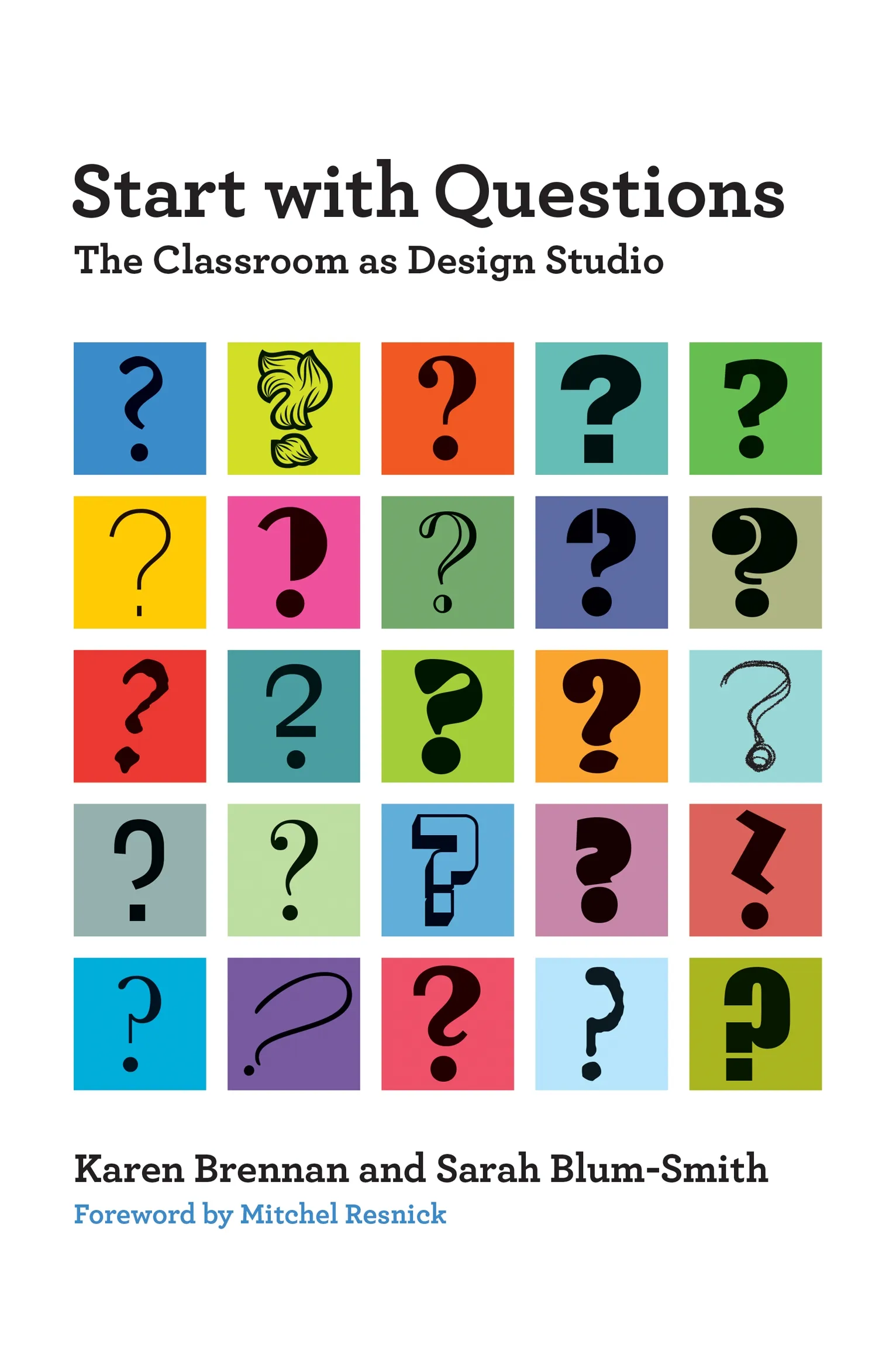
What if classrooms were places where all learners have opportunities to work on projects and explore ideas that feel important to them? To have their voice and curiosity honored, and to have access to peers and teachers who support them on their learning journeys?
In Start with Questions, Karen Brennan and Sarah Blum-Smith explore how K–12 teachers are making this possible by supporting students’ self-directed learning—an approach to learning that enables students to find joy and meaning in what they are doing, enhancing their learning in the moment and creating excitement for future learning.
Available March 3, 2026
Promotion Code
READMIT20 Penguin Random House 20% off (US only)
The Book
Based on a year-long study with 25 teachers in elementary, middle, and high school computing classrooms across the United States, the book showcases teaching that centers students’ ideas for what and how they learn.
The book shares stories of practice drawn from teacher interviews, classroom observations, and reflective journals. Each story is accompanied by theory from educators, researchers, and philosophers—such as Maria Montessori, Seymour Papert, bell hooks, Paulo Freire, and Donald Schön—to illuminate the powerful principles underlying teachers’ support of self-directed learning in the classroom.
Collectively, the stories and theory offer a vision of how beautiful learning happens when teachers start with questions and create the conditions for learners to take themselves and their ideas seriously.
Listen to Karen and Sarah read the chapter “Do you think you know how to start?”—a story of Benjamin, a STEM teacher helping one of his fifth-graders, paired with Eleanor Duckworth’s The Having of Wonderful Ideas.
Part IFoundations
Part IIQuestions
An illustration of the classroom as design studio through forty stories of teachers supporting self-direction, each consisting of an opening question, a vignette of classroom practice, and a theoretically grounded analysis of the classroom activities
- What are you interested in?
- What’s important to you?
- What’s your vision?
- What are some possible ideas?
- Do you think you know how to start?
- What’s a good thing that happened in your life this week?
- What’s interesting about this?
- How could you use this for your own ideas?
- What do you want to do?
- Do you want to make any changes?
- Would you like to stay and code with us this morning?
- Can you help us learn?
- What can we make together?
- What do you want to build today?
- Why can’t a bowl of noodles be a character?
- What did you try?
- Did you make the music come out like you wanted?
- That looks awesome! What will happen next?
- What’s up?
- What have others done?
- Who doesn’t get it at all?
- What do you think?
- What are you going to do now?
- What can you make with it?
- How can we fix it?
- Does anyone want to share?
- Who discovered the coolest things?
- What are other people doing?
- Did you ask your neighbor?
- Would you like to do that?
- Can you teach that to me?
- You’ve got this, right?
- What are you trying to do?
- What do you expect of yourself?
- What does this mean to you?
- What does quality mean to you?
- What would you like to showcase?
- What were your struggles?
- What would you have done if you had more time?
- What do you see?
Part IIIDirections
- What did we see?An exploration of core themes across this collective description of the classroom as design studio
- What can we do?An epilogue written by Sarah, making meaning of these ideas in the context of her own classroom practice
Upcoming Events
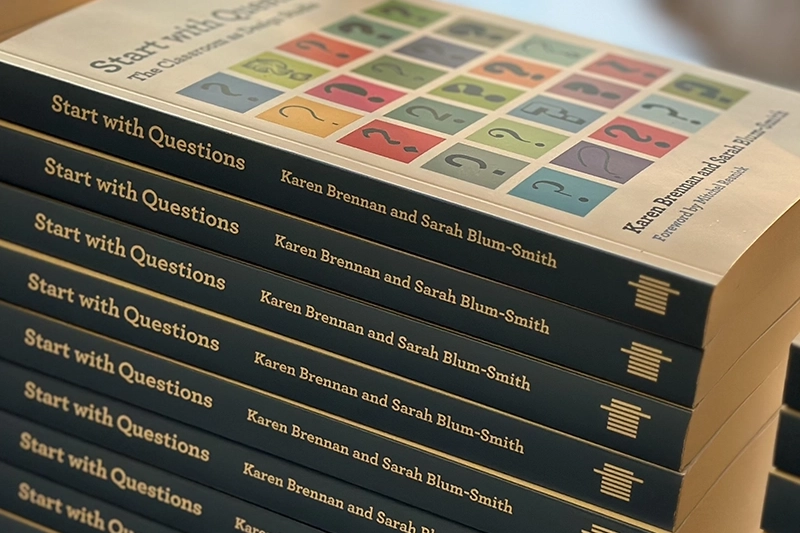
Free Book Giveaway
Applications open until Sunday, March 22, 2026
We’re giving away 100 free copies of Start with Questions to K–12 teachers in the U.S. Please apply by Sunday, March 22; recipients will be selected and notified by March 23.
Apply Now
Book Club
Starting Tuesday, April 7, 2026
Want to explore Start with Questions with other educators? Join us for eight weeks of reading and discussion on Substack.
Join UsMedia and Past Events
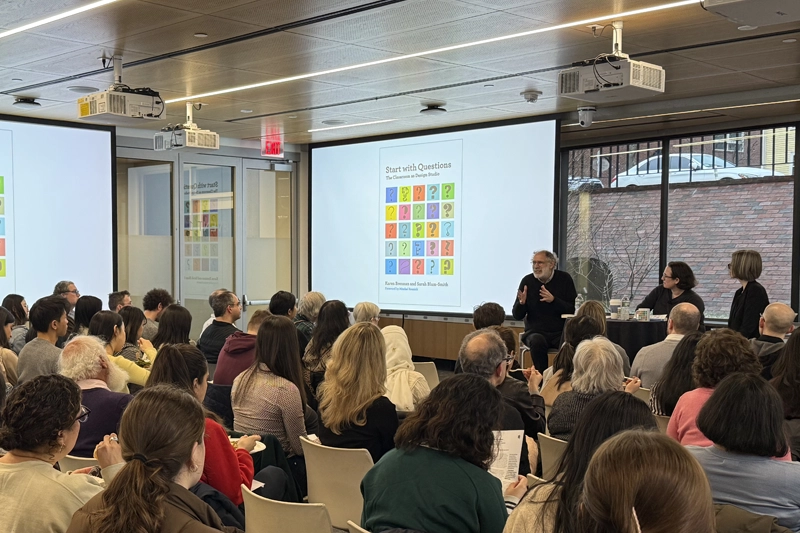
HGSE Book Party
Thursday, March 12, 2026
We celebrated Start with Questions at the Harvard Graduate School of Education, with MIT Media Lab Professor Mitchel Resnick as our discussant.
Watch The Recording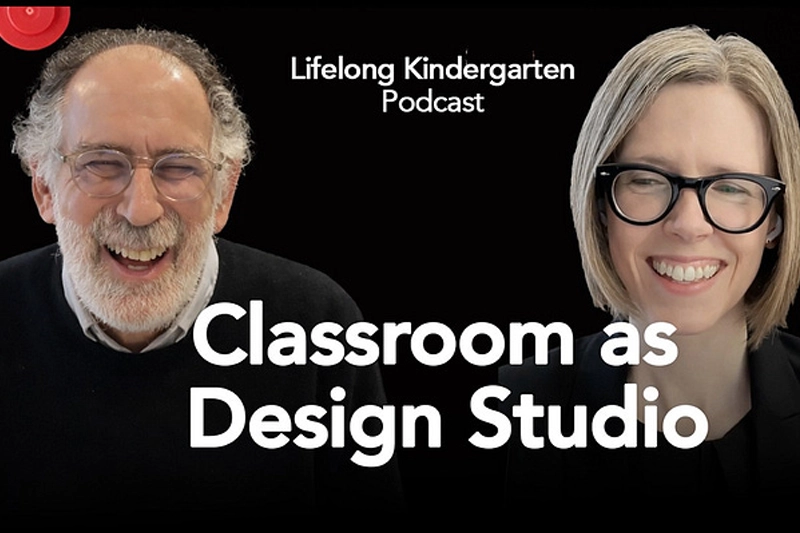
Lifelong Kindergarten Podcast
Wednesday, March 11, 2026
Karen joins Mitchel Resnick on the Lifelong Kindergarten podcast to discuss the classroom as a design studio and what it means to start with questions.
Medford Public Schools
Friday, March 6, 2026
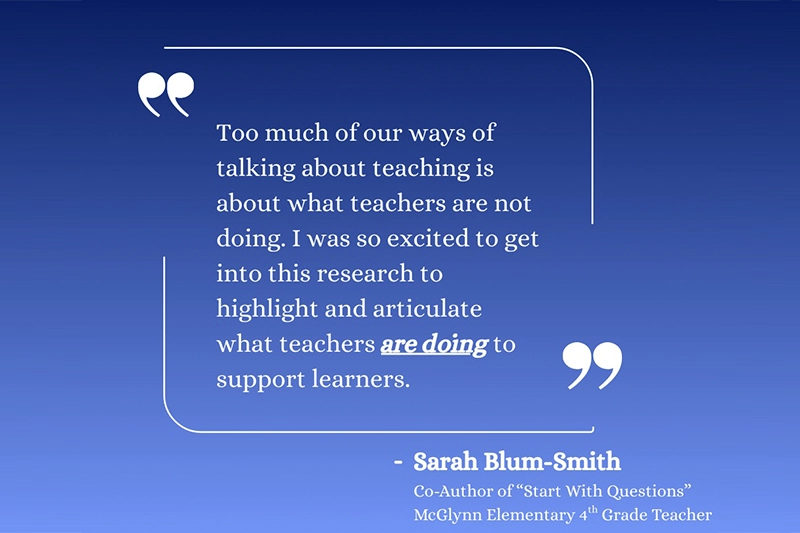
Medford Public Schools congratulates Sarah on the release of Start with Questions, highlighting how the book articulates what teachers are doing to center learners.
Read Post
Harvard EdCast
Thursday, March 5, 2026
Karen joins the Harvard EdCast to discuss how questions can transform student-centered learning and what happens when educators take students’ ideas seriously.
Listen Now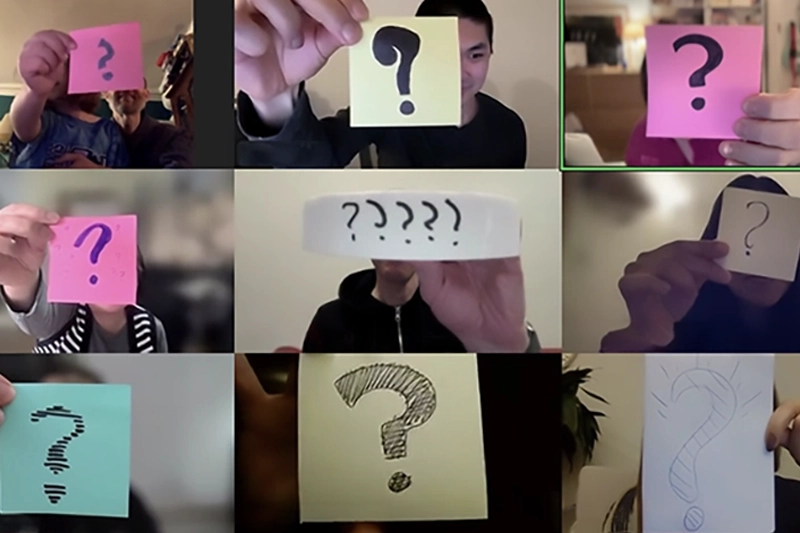
Virtual Book Party
Monday, March 2, 2026
We celebrated the eve of our book launch with an hour of conversation on Zoom—sharing the motivation for the book, reading excerpts, and answering questions.
Watch The ReadingConnect with Us
We’d love to hear from you! Whether you have questions about the book, are interested in a workshop or speaking engagement, or want to share how you’re exploring these ideas in your classroom, please reach out to Karen via email at karen_brennan@gse.harvard.edu or connect via LinkedIn.